Showing posts with label Poverty. Show all posts

Thursday, 28 March 2013

Five Million Reasons I'm giving to Syria

Today I was invited along by Tearfund to the Disaster Emergency Committee's Syria Live event hosted in the BT Tower in London. After a rather embarrassing 'I think I'm lost, oh THERE is the giant tower!' moment I arrived and got acquainted with some fellow tweeters. What followed was an hour Q&A with six leading experts from the UK's biggest humanitarian organisations. It is well worth a listen to the event and you can find it on the DEC website.

from dec.org.uk
While I was at the event I was mulling over what an appropriate post would be from all the heart rending and inspiring stories the experts were sharing with us. Ultimately it all comes down to to those, to the 5 million people trapped or displaced as a result of the conflict in Syria each with their own desperate needs, individual stories and hopes for the future. There are five million reasons right there to donate right now. I have also put together my top ten, however, for why I am donating today.
  1. The money given to the DEC goes straight to partner organisations in our leading charities who are working on the ground NOW. The cash will get directly to those who are in extreme need of basic food supplies and medicine. The channels are open, the needs identified, they just need the cash.
  2. The scale of the crisis is massive and escalating. 8,000 people, up from 1,000 at the start of the year, are fleeing Syria every single day. Basic supplies are desperately needed for the camps receiving them in Jordan and Lebanon.
  3. Civilians are being disproportionately affected by the conflict. A large proportion of the refugees fleeing Syria are women and children.
  4. The conflict has been going on for much longer than expected and is now considered to be the worst humanitarian crisis in the 21st century.
  5. Half of all refugees are children and are falling behind in their education. The money you give would allow partners to provide education for these children in the refugee camps to allow them to stay on track for until they return home.
  6. On escaping from the country people face life threatening situations as they pass through active conflict. Our donations means that when they cross the border they are welcomed with supplies, support and a reminder that the international community cares as well as supporting people who are trapped in Syria and unable to flee.
  7. The DEC partner organisations are directly consulting with affected people in Syria on how they feel the money should be spent ensuring the money gets to what they consider to be the most important needs.
  8. Individuals and organizations in countries hosting refugees are working in a massively sacrificial manner to care for vulnerable people. Teachers are working double shifts to try and fit in extra children in schools that have doubled in size over night. Our donations can provide additional support to these overstretched areas.
  9. Partner organisations are looking to people's emotional as well as physical well being. The level of suffering is overwhelming, our donations provide someone to care and to help people rebuild their lives.
  10. These are people just like us, having babies, wanting to care for their children and get on with normal life and yet have been chased from their homes in fear. Let's stand with them.
Donate online here.

Tuesday, 13 November 2012

Remember Africa

Remember Africa
the loop held in small hands
rolling towards me
it reached me like the rays of the sun
setting over the land.
 
 
Remember Africa
words spoken over the fire
flames lick the blackness
and we danced
sang a new song that day.
 
 
Remeber Africa
what you shared with me
on the sandy pathway
lifting up your eyes
to the hopes we created there.
 
 
Remember Africa
of dedications, things we kept behind
when tomorrow was as lost
 so we hung on to today
like children on a mother's arm.
 
 
Remember Africa
what we found there
a pearl in a holy place
one buried there
that spoke of richness, recovery, new beginnings.
 
 
....because sometimes it is good to remember.


Tuesday, 9 October 2012

Colour

You know when you get busy, the first thing that seems to go out of life is colour. You don't notice things anymore. When this happens I take pictures, real ones, mental ones, word ones. Here's todays spotted while reading for my essay.


For some proper photography to get you in the autumnal spirit, check out Hannah's brilliant blog!

Wednesday, 1 August 2012

Zambia -and as for me….


Our trip ended with a brilliant day of animal tracking where I had the opportunity to fully indulge my inner idiot crawling along the ground trying not to scare antelope (much to the amusement of the team who declared Ben and I ‘properly insane’). We then had a couple of hours alone in the game reserve. We were dropped off half a kilometre from each other, our watches removed and told the van would be back ‘at some time, later.’ After such an intense time it was really quite brilliant to have time to process and reflect before our long journey back to the UK and where better to think than in the sunshine watched some Zebra have a wander?

And what did I make of it? All those wonderful experiences, all those amazing people? I’m still processing it all now to be honest. The first thing that really struck me was how much I enjoyed leading the team with Ben. I loved seeing them grow and develop as they took on, and overcame, new challenges. It was freeing to have a focus beyond myself, to be watching and observing and cheering others on to their goals. I knew the team would be good fun but there is something really brilliant about teenagers that makes them such great company. An amazing sense of fun, to be sure, but also an openness to life, a willingness to be affected and changed.

Being back home I miss the company, the laughter over the campfire and each day being so utterly extraordinary. I was instantly fed up of TV and computers. My Blackberry is off a lot more these days. I’m craving conversation much more and finding the constant bombardment with news and social media hard to take. I keep thinking of my spot on the veranda where I sat whenever I got a minute and read a book or just took some thinking time.

I realised how infrequently I take the time to stop and just stare into space when I’m at home. There is always entertainment, a magazine to be read, a TV programme to catch up on. As one of the girls put it ‘instead of watching someone else life on TV or reading about someone else’s life on Facebook, you just actually live your own life.’ Your focus is on who you are with, on what is happening right now rather than what someone else may or may not be doing elsewhere.

But biggest of all is the imprint left by the people I met. People like Donata and Foibe. I’ve been given renewed energy and enthusiasm for the journey I’m on. At my interview for ordained ministry one of the interviewers gave a morning reflection which ended with a sentence that has really stuck with me ‘God will give you people for whom to care.’ I think all of us sitting there, offering up our futures to an unknown ending, craved that. I’m encouraged that when I had people for whom to care I felt more alive than when my only real care is myself.

The people I met were the most extraordinary example of service I’ve ever seen. Walking for miles to feed someone else, suffering hardship and taking it on with a level of determination that I’ve not seen matched anywhere else. I truly felt like I was in the presence of the spirit of God, with people who understood what it really meant to walk in the footsteps of Jesus – quite literally in Donata’s case! And all this lays down a big challenge for me. I’ve always hungered after the extraordinary and felt that life in the footsteps of Jesus has to more than a few hymns and turning up on Sundays. It always has been more than that for me but seeing faith in action in Zambia shows me that there is so much more.

At the moment I have more questions than answers. I’m working out what all of this means for my life here in the UK. In a way I’m holding on the tension of travelling between two different worlds. Holding on to the feeling of inequality, holding on to the challenge of radical service, holding on to the desire for quiet in the noise of my world. Because I don’t want to transition right back into what I was before. I want to be changed by Zambia.

Last week I read a verse from Jesus’ famous speech, The Beatitudes in Matthews Gospel. It says:

‘Blessed are those who hunger and thirst for righteousness for they will be filled.’

Righteousness is an old fashioned word to us today but it basically means right-ness, justice. On the last leg of the mountain climb me and a group of girls were walking together in the baking hot sun. Our water had ran out and there was no access to any more until we reached our camp three hours away. I have never been that thirsty in my life. When we finally hit the stream we were straight in there, drinking out of our hands, desperate to quench our thirst.

Thirst isn’t a comfortable thing so to thirst for righteousness is to seek it with the same desperation that we looked for water, as something you need and cannot live without. These difficulties in adjusting back to life here and these hard questions that are putting a spanner in how I usually spend my time and the norms I live with feel a bit like thirsting for something. So I’m waiting expectantly knowing that there is something more than sticking my hand in my pocket and giving a tenner that is to come from this trip.

And so that was Zambia, better, more life changing that I could ever have predicted. But I do have one prediction this time that I’m pretty confident of – that was not my last time in Africa!

Friday, 27 July 2012

Zambia Part 5 – Donata‏

I really have to devote an entire blog post to Donata because quite frankly a whole book on her life wouldn’t be misspent. This woman is amazing. We met Donata on one of our last days at Ndubs when she brought her school, a disabled school that she founded in her name, for a day of activities and fun. I’ll start with a little of Donata’s life story and I’m sure you’ll be as wowed as I am.
The lady herself
Donata was orphaned aged ten and then went to live with her grandfather who also passed away shortly after. She suffered from polio in her first week of life and so she herself is disabled and struggles to walk. At the point of destitution she was found by a Catholic priest who took her to an orphanage run by some missionaries. There she was educated and cared for and eventually she married and had a family of her own.

Like all women in Zambia Donata didn’t escape the loss of children. Three of her children died including her son who died recently at the age of 26 leaving two small children behind. It was as Donata reached her fifties and her children were all grown up that she started to think about wanting to give back for the blessings she received by being taken in by those missionaries all those years before. She describes her life’s work as ‘one big thank you to God for looking after me.’

And that thank you became the Donata School for disabled children. The lot for blind, deaf and physically disabled children in Zambia is intensely sad and before Donata began her school none of these children in the area were being educated. This only compounds the hard lot they have in life and makes accessing medical care and other support all the more difficult.

Donata funded the school (you can see a video of their new building built by the UK charity Build International here), and continues to fund it, by walking from farm to farm begging on behalf of the children. She walks for two weeks at a time, sleeping on the road. When I stared at her, mouth open at this level of extraordinary tale, she said ‘Well, the Lord Jesus walked from place to place all his life and so can I’. Have you ever seen service like that?!

A few years into founding the school a particularly unexpected arrival appeared on Donata’s doorstep, a little boy. He was deaf and both his parents had died. His extended family, not knowing how to cope with him, left him with Donata who, though unable to fully provide for all her own needs, took him in. He is now a strapping sixteen year old, full of life and even better full of dignity. That is what Donata does best. The children performed a poem for us in sign language called ‘Disability is not inability’.Never have I tried so unsuccessfully not to cry in my life!! Donata’s unceasing commitment to these children and her constant instilling in them that they are valuable and precious no matter what challenges they face is truly fantastic.

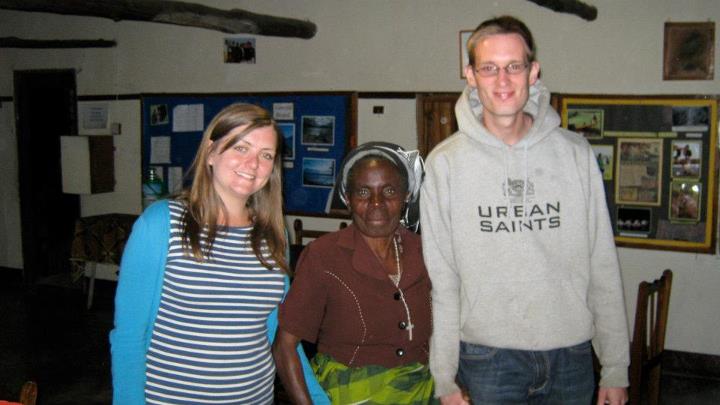
Not satisfied with all the many children she has in Zambia Donata took me and Ben under her wing and pronounced us her English grandchildren! She loves the Queen and was seriously excited that I grew up in Windsor. If anyone deserves a letter from the Queen then my goodness this women does and I’m on a personal mission to get one for her. The school is very much on my heart and I’m mulling over what I can do best to help them. If this extraordinary story has tugged on your heartstrings then do check out the Donata school website or drop me a line.

Thursday, 26 July 2012

Zambia Part 4 - Miloso

Our second trip from Ndubaluba was out to the area of Miloso. The purpose of the trip was to do some practical tasks to help people and projects in the area and just to visit some people and spread a little sunshine. The first day was spent visiting patients who are part of a home based care initiative run by the Miloso Community Church. They bring basic care and food supplies to people cut off from medical provision and as we drove out to the villages via dirt roads, sometimes directly over the bush, it was immediately obvious why such a scheme is needed.
The first person we visited had been complaining with stomach pains, leaving him unable to work, complicated by his developing HIV/AIDS. He had never been to see a doctor because the hospital is several hours walk, no one in the village has any kind of transportation and he’s not up to making the journey on foot. He had been suffering from the same condition since 1992 and has taken nothing but paracetemol for it.

The story was pretty similar with each patient that we visited. Desperate situations that go on way too long but thankfully supportive communities and families who rally round and support the person. The stigma of HIV is being reduced now that it is a much more openly discussed topic. This in itself is a wonderful breakthrough.

At the second family we visited the patient was an eight year old girl called Memory who also has HIV/AIDS. The family was very different from the first we visited. There was silence there, almost a cloud of sadness and Memory clung to her Mum, desperately shy. The effects of HIV/AIDS meant that she is under developed and unable to speak but since receiving antiretrovirals she has started to say a few words and is more able to play with her siblings and the other children in the village.

Memory and her mother playing with the hula hoop she loved
It took a bit of coaxing but the lure of a skipping rope and hula hoop had the children come out from behind the bags of maize and they were charging around with us in no time. One of the most touching sights was Memory running along the dust path rolling the hula hoop with an enormous smile on her face. The hoop belonged to the Ndubs but the team bought it off them so they could give it to Memory. Money well spent when we saw the smile on her face to be left with it.

Our final patient was an elderly lady suffering from what seemed to be the effects of high blood pressure but again she had only been given paracetamol. She had been suffering with intense migranes for eight years. It’s hard to comprehend that level of suffering. We painted her house, introduced her grandchildren to the wonders of bubbles and cooked the family dinner.

We love bubbles!
It felt like so little to offer but they commented that our being there raised their spirits, simply by being remembered by a world that seems to be racing on without them. We split into two team for the day and the other group encountered a lady who was unable to have an operation because it cost £25. The kids immediately pulled out their pocket money and gave it to her. For that lady the future has changed. Even the lifting of Memory’s spirits with a hula hoop felt like something. It might be a drop in the ocean but what is the ocean if not a collection of drops?

The next day we embarked on a practical project plastering a room in a recently built house for a teacher who would be teaching at the new secondary school. I quickly learned that I cannot plaster, AT ALL, but have some skills in cement mixing. It was hot, hard work but satisfying to finish and that evening we were treated to one of the greatest moment of the trip for me so far.

We set up a campfire and the word spread to the local villages that it was an open invitation. Soon people started emerging from the bush and tentatively taking a seat with us. We sang some songs and the Miloso Church Choir absolutely wowed, and happily upstaged (!), us with their singing. Sitting there, under the stars listening to these beautiful voices was one of those moments where I almost descend above myself and thought ‘I can’t believe I’m here.’

We then sang a song together in Bemba and in English called ‘There’s no one like Jesus.’ It’s a real Zambian favourite that I remembered from my last trip. There is something remarkable about sitting down with someone on the other side of the globe, where you have seemingly nothing in common, and talking about God. It’s truly amazing as you realise you have the same struggles, the same hopes and that there is something tangible in the nature of God that they have experienced too. There is nothing more unifying than that. We prayed together in our different languages and my perceptions of who God is and what he is doing in this world blew right open all over again. It was amazing.

Finally we spent our last day in Miloso at the local primary school where our team taught for the day. There are 1,500 children in the school and five classrooms. The teacher teach in shifts with eighty children in each class. They split them into groups of forty and teach from 7am to 12.20pm and then from 12.30pm to 5pm. Yes, that’s a ten minute break ALL DAY. Imagine the marking, imagine the lesson planning! These people are heroes.

Miloso Middle Basic School, that inside of the tyre on the right is the school bell!
Many of the children we had met in the villages or over the campfire were at the school and we were greeted like old friends before being thoroughly destroyed on the netball court. Those are some skilled children! I was hugely encouraged to see these posters on the walls in the classroom and reminded again of how fundamental, how life changing, education is.

Amen.
It is here that norms begin to change, that rights for women and children that are so vital for development are discussed. Here the first seeds of change are planted. The secondary school will be another major step in the right direction.

While wandering between classrooms I also came across this little gem which I have adopted as my house motto, thanks Miloso School!!


 And that was Miloso, a remarkable few days that I would re live in a heartbeat.

Tuesday, 24 July 2012

Zambia Part 2 – Arrival at Ndubaluba

I loved Ndubaluba from the moment I arrived there. There is something in the atmosphere of the place, something light-hearted but sincere that made me feel very at home there. Ndubs was our base for the rest of the trip and from there we went out on a couple of different trips, one up a mountain and another out into the community.

Our house at Ndubs, I miss that deck chair!
Ndubs itself is owned by the Chengelo School and is an outdoor activity centre largely for the school but also for local schools in the community. One of the greatest pleasures of being there was seeing local children, who have never had the opportunity to go on a school trip let alone do the activities you can do at Ndubs, break into a smile when they got to have a go at a climbing wall or raft building.

Some local kids with our team getting ready to scale the wall
Our first few days there was the perfect balance between getting to know the community and clarifying our aims as a team for the rest of the trip. After the intensity of our time in Masaiti (and several doses of food poisoning!!) it was the perfect time to stop and reflect. For me our time kicked off brilliantly on our first Sunday at Ndubs when we went off to the Ndubaluba Compound Church.

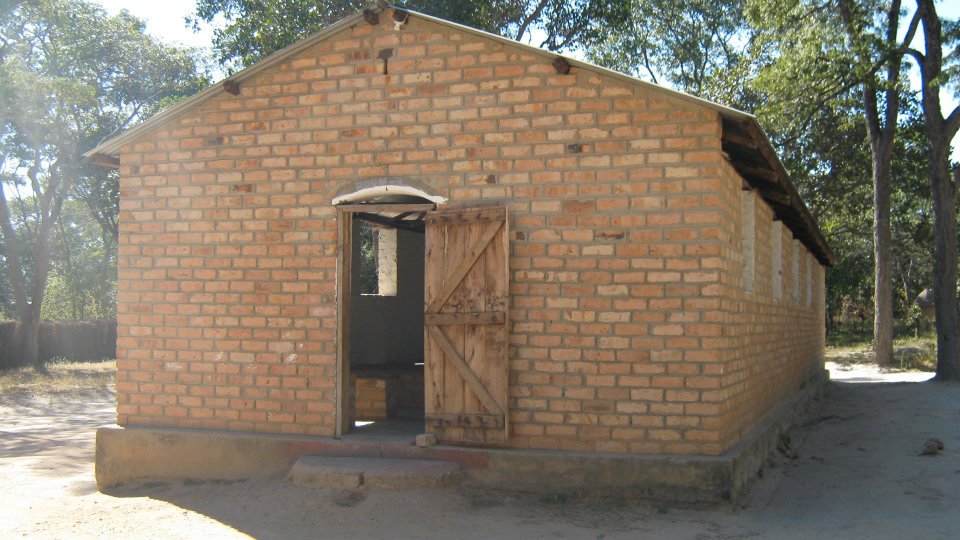
The church itself was basically a small brick building with a corrugated iron roof and the 'pews' were made out of brick and mud. The altar was a simple wooden table with two baskets of plastic flowers on each end that I saw someone painstakingly dusting outside the church before the service. The music was provided by a seriously retro Casio keyboard which we were kept entertained by while the congregation turned up in 'African time' with some of it's sample tunes including a rendition of 'Jingle Bells'! They were very shocked when we all started singing along!!

Ndubaluba Compound Church

The inside of the church (also used as a classroom hence the blackboard and times tables!)
As I sat in that service, which was so full of colour, of the most amazing singing I have ever heard and was absolutely and wonderfully raucous I was reminded again why I'm on the path that I'm on. I took some photos to remind myself one day, should I ever be involved in a church redevelopment project in the UK, that God can just as well be sung to in a multi-purpose brick shack as he can a grand cathedral. Somehow being there brought me back to the heart of the matter, what I'm doing this all for. For that joy, that love of God that is greater than any theories or styles or buildings.

That evening we went to a Christian youth event called Fusion at Chengelo School. With about 1000 young people and a fantastic band made up of teachers (you would not BELIEVE these people were teachers, the kids were cheering like it was Will.I.Am up there!!) the place was absolutely buzzing. In Africa singing to God is not a stand up sit down affair. You use your whole body and no more so than at a youth event. They had us spinning around, dancing to the corners of the room, cheering, singing to our neighbour. My pride in our team swelled to new proportions when one of their dance moves swept the room mexican wave style and had the whole room going!

Our team sang some songs and performed a drama and short talk which went down an absolute storm. There is something amazing about teenagers talking directly to teenagers about life and faith. Being a Christian teenager in the UK isn't easy, you are automatically different at a time in life when you just want to fit in. It takes courage. Watching them speak and perform with such sincerity and in a way that moved so many people was another hugely pride-making moment.

When we returned to Ndubs that evening an even bigger challenge was looming, Mount Mumpu. Yes dear blog readers THAT part of the trip. More on that coming up......


Monday, 23 July 2012

Zambia Part 1 - Masaiti

We’re back! In many ways I have no idea where to start when it comes to talking about all the many things that happened on this life changing trip to Zambia. We ate an alarming amount of starch, we watched amazing sunsets, we sang and danced with the locals under the stars, we (ok I…!)lost the will to live half way up a mountain. I watched a pretty great group of teenagers get even greater. I loved every minute of it. It was inspiring, overwhelming and absolutely joyful.

One of those Zambian sunsets
Over the next week I’m planning on writing a series of blog posts on our adventures and short of any better ideas I’m going to take it chronologically figuring I will at least be less likely to miss something this way! So starting off where we began, our first stop, after a 24 hour trip via Kenya and a whole lot of very bumpy dirt roads, was the Foundation for Cross-Cultural Education(FCE) in Masaiti, an hour or so from the town of Ndola in Northern Zambia.

The centre itself was a veritable Eden after the long journey and certainly seems to be an Eden for the local community. Nested in the middle of the bush, it is a buzzing education centre for the purposes of development. From teacher training to farming techniques, and providing courses for visiting groups like ours, the centre has a varied and far reaching programme. The ethos of the place is firmly on giving your best, whether your role be in hospitality, laying bricks or tending an orchard - and it shows.

Mango trees being organically grown and then sold on to local people to cultivate at home
Their view on development was infinitely practical and empowering. They teach that Africa is rich in resources and work to empower people to access them through education and training. They don’t train people to use fertilizers other than ones they can make themselves from what they can find in the bush. Bricks for house building are fired on site and made straight from the dust of the earth.

After a night of catching up on sleep we were off to the local school for assembly and then into the villages (on foot with the help of some sympathetic school children who took pity on us and lead the way!) for an overnight stay to see the situation that FCE is working in to for ourselves. Doing the walk that the children do twice daily to school in the baking afternoon heat was itself an eye opening experience. Particularly when you consider that most children eat once a day in the evening and so are walking for several hours daily on an empty stomach.

The village, like most of them in this incredibly rural part of the world, consisted of a few dozen straw roofed huts surrounded by basic crops such as maize and tomatoes. Houses are one or two rooms to house families of five to ten people. Chickens scratch around in the dust but are only eaten once a year for Christmas. The intensity of poverty struck me immediately. There is no back up here. One failed harvest and the result is starvation.

The village we stayed at with traditional huts made from bush grass and mud
Men and women rarely mix in this traditional village culture and the father of the family sat as far away from me as was physically possible while still keeping within vague shouting distance. I quickly excused myself to join the women (who sit on the floor, only men get chairs!!) and very soon the stories started rolling.

The most remarkable person I met was Foibe. Aged just 14 she had set up a micro business from her front door selling drinks and snacks to fund her secondary school education. Dressed in a long grey suit skirt and pink shirt she stood out immediately, a shiny example of future hope. When I asked her about her plans as she taught me to cook, Zambian style over a camp fire, she laughed at the possibility of marriage. ‘That is the problem, girls marry so young and everything stays the same. I am going to get a job and help my family.’And trust me, she will.

The stories from the women were heartbreakingly similar. No one has escaped the pain of the death of a child, bracelets from the witch doctor around the babies ankles attest to that very real fear. The mother of the family we were staying with counted off on her fingers the five of her children that had died and at what age. It’s hard to comprehend that level of suffering.

It was a stark introduction to the grinding realities of poverty. I couldn’t look around and give vain platitudes about how nice it is to live in community or glorify the ‘simple life’. That life is painful and unspeakably hard. Poverty has no golden hue of times gone past around it - it is rough and gritty like sand paper. And yet the next morning, as we gathered the nursery age children together for some activities to prepare them for starting school, the promise that Foibe displayed was shown over and over again. 
Just one of the grogeous children we met
We sang, we laughed, they charged around in the dust and my heart wanted to burst for how wonderful it was. At that moment there was nowhere better on this earth than sat there in the brilliant African sun with those children, so full of life. Laughter was a common sound in the villages and it spoke to me about how resilient the human spirit is. What a privilege to see, what an amazing few days.…and that was just the start of the journey! Much, much more to come….!

Monday, 25 June 2012

Zambia bound

As of this time next week I’ll be getting ready to board a plane bound for Zambia so there will be a bit of a moratorium on the ol’ blog posts until the end of July (unless I happen to stumble across a PC somewhere on my travels!).
The last time I visited Zambia with Tearfund about seven years ago it was a memorable and life changing experience. It was where I first started to write as I was overwhelmed on every front by new senses and experiences that begged to be recorded somehow. It was where I caught a whiff of my future as we read these words by the prophet Amos (from the Old Testament) writing in about 750 BC.  Speaking as an oracle from God he says:
“Do you know what I want?
   I want justice—oceans of it.
I want fairness—rivers of it.
   That's what I want.”
Read that and see yet another child begging by the side of the road and you will be changed.
I was blessed with capable, confident and insightful leaders on my trip. They facilitated our experiences, noted our reactions and spent the rest of the year encouraging us as we put our experiences into practice back in the UK as youth and student workers in our towns. And now the time has come around for me to be the leader. I can’t wait (and I can’t quite believe it!)!
In Zambia the first time around with my two pals who invented a brillaint game called 'Scary Monsters' which basically involved jumping on my and screaming 'Scary Monsters, arghhhh!'
The group of students we are taking are already remarkable. They are only 16 but I’ve heard statements come out of their mouths that wouldn’t be out of place being spoken by a forty year old. They are shiny with potential and at the start of an exciting journey onto further study or first jobs. It’s a privilege to be trusted with them at such a formative stage.
I’ve mentioned before that I’ve been surprised by my lack of anxiety about the trip (minus a stolen passport fiasco – THAT I was majorly stressed about). It has made me realised that all the ups and downs and many unknowns of the journey to ordination training might have had an effect. Hurrah!  Dare I say it, I think I’ve become more comfortable in the unknown than I have been before.
I’m more comfortable staring a challenge in the face and more confident that, scary as it might seem, the resources will be there when I need them. Even the news that our expedition leader for our mountain climb is dubbed ‘Hardcore Colin’ and wants us to abseil down the side of a mountain hasn’t COMPLETELY done me in. They should start offering the Church of England ministry selection process as a bootcamp for the nerves!
The last few years have been challenge after challenge after challenge and this pattern shows no sign of letting up any time soon. The enormity of the challenges coming up even this year makes me catch my breath when I think about them. But I’m also enjoying it. Immensely. Learning to drop the need to be in control of everything, even a tiny little bit, is hugely liberating. It leads to adventures, unexpected joys and an ability to be more where you are, right now, and enjoy it. I want more, more, more of it!
So I haven’t really thought that much about Zambia. Short of ordering a mozzie net online and sewing some gifts for the ladies we’ll be staying with in a local village I’m going as I am. Taking just the sweet expectation of watching some great kids get a little greater and coming back a little changed for the better myself by the many fantastic people I know I’ll meet. So I’ll see you on the other side!

Friday, 15 June 2012

Poverty, responsibility and not hacking phones

I’ve been thinking this week about responsibility. When the news about phone hacking first broke I remember feeling really alarmed for the people caught up in that culture of journalism. It’s not that it’s not despicable to hack people’s phones, of course it is, but how easy is it to enter a culture like a work place and just tow the line? What everyone is telling you is normal and acceptable become normal. Now we are seeing these people, and their PAs and chauffeurs, facing jail sentences. It is right, they did the wrong thing, but the thought keeps ringing in my ears – how easy was it to end up there?
It’s all a matter of integrity, of course, and taking responsibility for your own choices. A couple of nights ago I was at a talk run by the aid and development charity Tearfund. It made me wonder if the dramatic inequality in the world that we accept as normal is comparable. As an entire nation have we been caught up in a culture where inequality has been accepted and our responsibility abdicated?
I don’t think of God as an angry disciplinarian hauling you up before a cosmic court for every wrong decision you make. That wasn’t the kind of God shown in the life of Jesus who forgave when others were ready to throw stones. But I am absolutely certain that God is justice itself, particularly when it comes to the cause of the weak and the poor.
So I tread a careful line, knowing full acceptance but remembering the standards of the one to whom I appeal. What does he make of our communal acceptance of starvation when we throw yet more food in the bin? Of polluting the earth and allowing the poor to pay for it when their harvests fail and villages flood? So that’s the situation, what of the answer? That’s where it gets tricky eh?
And this brings me back to personal responsibility. Were the people who hacked phones any less responsible because it wasn’t there idea in the first place? Or was the error in colluding with something that they knew, really, was wrong? Standing up against a dominant culture is hard, there is no doubt about it.
And when it comes to global poverty it is even harder. Rather than just NOT hacking a phone we don’t know what to do. We encounter so much suffering through the news or charity campaigns that the sheer volume of it becomes a barrier to acting. Trying to single handily deal with the crises of the world is, like the Tearfund rep last night said, ‘like turning up to an earthquake with a dustpan and brush.’ We can’t change the climate or get clean water to everyone in the world on our own.
My thoughts on this over the last few days can be summed up in the phrase - ‘circle of influence’. I can change everything but I can change what goes on in my ‘circle’. I know I can reduce my own impact on the earth. I can urge the decision makers to hear the voice of the poor. I can grapple with the issues of my day, think things through, seek out opportunities to act. Most of all I can question, is this right or have I just accepted 'normal'?
Rather than living with startled rabbit syndrome brought about by the vastness of the situation I’ve found that accepting that the only thing I can change is myself to be hugely empowering. And more successful. Rather than being startled into inaction, recognising personal responsibility liberates into action. Rather than waiting for the world to change, I change. So there it is, my little contribution to the debate. What’s your take?